
In mammals, germ cell precursors undergo global epigenetic reprogramming with a near-total erasure of DNA methylation, except for young transposable elements that are potentially harmful to genome integrity.
However, the mechanisms that establish this unique epigenetic profile of germ cells are poorly understood.
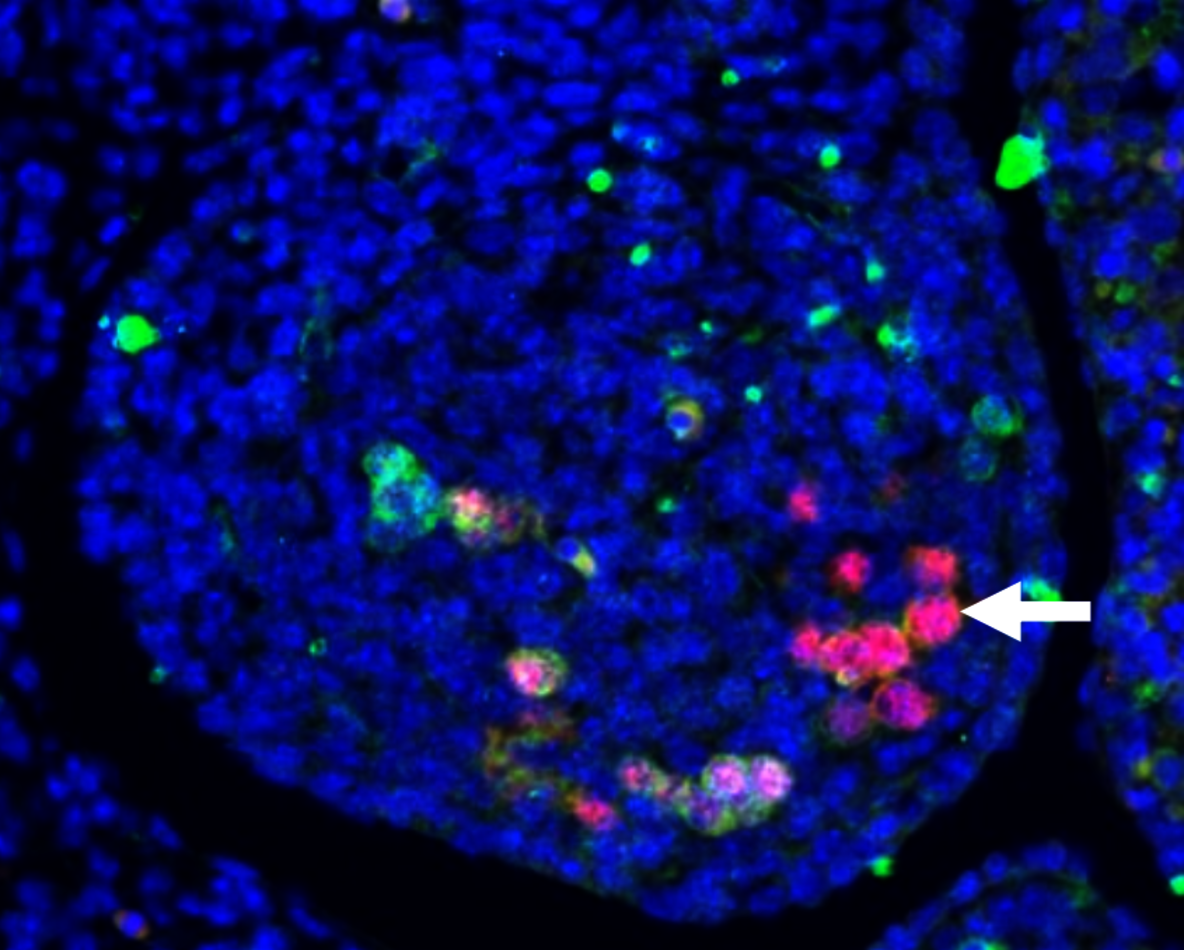
In a new study published in the journal Nature Communications, the team of Michael Weber identified UHRF2 as a novel factor required for the selective DNA methylation of transposable elements in primordial germ cells. The results demonstrate that the inactivation of the Uhrf2 gene in mice abolishes DNA methylation of transposable elements in these cells and impairs oocyte development and fertility in female mice.
This study has uncovered a new epigenetic pathway that regulates germ cell development in mammals, with potential implications for identifying new therapeutic targets for human infertility.
Article:
Bender A, Morel M, Dumas M, Klopfenstein M, Osmani N, Greenberg MVC, Bourc'his D, Ghyselinck NB, Weber M (2025). UHRF2 mediates resistance to DNA methylation reprogramming in primordial germ cells. Nat Commun 16(1):7350. doi: 10.1038/s41467-025-61954-0.