


A new non-opioid strategy against pain
A study co-led by Frédéric Simonin’s team reveals a new strategy for activating GALR2 with the stabilized spexin analogue LIT-01-144.
A study co-led by Frédéric Simonin’s team reveals a new strategy for activating GALR2 with the stabilized spexin analogue LIT-01-144.
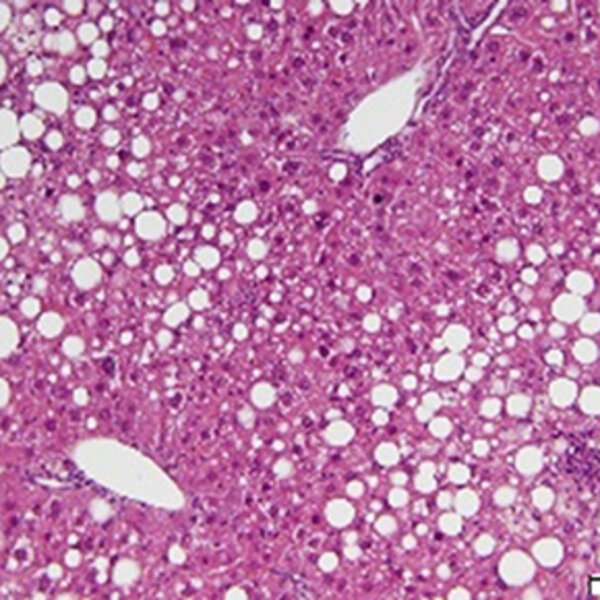
A study led by Sylviane Muller shows that the P140 peptide reduces liver inflammation and fibrosis in a mouse model of metabolic dysfunction-associated steatohepatitis (MASH).
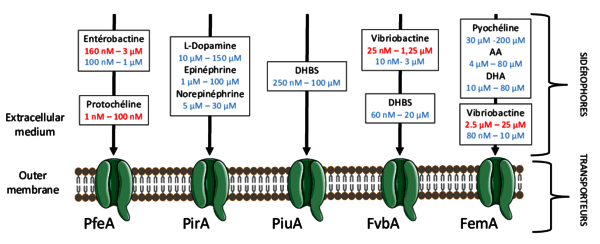
A study published by the team of Isabelle Schalk and Gaëtan Mislin reveals new regulatory strategies governing iron transporters.

A study led by Guy Zuber demonstrates that monoclonal antibodies can be delivered into cancer cells to neutralize intracellular targets.

A study conducted by the team of Sylviane Muller highlights a phenomenon of molecular mimicry that raises questions about the long-term immunological consequences of COVID-19.

Two studies co-led by Frédéric Simonin and Sandra Lecat reveal that inactivation of GPRASP1 blocks the tolerance to either a bronchodilator (asthma) or a delta-opioid receptor ligand (pain).

A study published by the team of Michael Weber reveals a new gene that regulates DNA methylation in germ cells.

A multicenter study coordinated by Sylviane Muller demonstrates the presence of antibodies in patients with long COVID that could threaten fertility.

Researchers from the IGBMC and Michaël Weber's team describe a new bioinformatics method for analyzing DNA methylation data at the genome level.

Isabelle Schalk published a review in Nature Reviews Microbiology to understand everything about bacterial siderophores: diversity, biological functions and applications.

The team of Katia Zanier unveils a new molecular mechanism involved in cell signaling. This work is published in the journal Nature Communications.

An international collaboration involving Frédéric Simonin's team has identified new opioid analgesic compounds that are potent but with attenuated side effects. This work was published in the Journal of Medicinal Chemistry.

A new study explains how the gut microbiota provides a natural barrier against pathogenic bacteria.

Mariel Donzeau (équipe Dynamisme du Replisome et Cancer) a développé une méthodologie utilisant l'électro-transfert d'ARNm dans les cellules eucaryotes pour l'expression de protéines ou de nanobodies avec une efficacité de transfection de plus de 95%.

Une étude de l'équipe de Michael Weber dévoile les mécanismes épigénétiques qui répriment les gènes germinaux dans les cellules somatiques.

L'équipe de Guy Zuber a développé une nouvelle approche basée sur des particules d'or pour une reconnaissance du mécanisme d’import nucléaire par cryo-microscopie électronique.

L'équipe de Françoise Dantzer révèle la protéine PARP3 comme une nouvelle enzyme responsable de l’agressivité des cancers.

L'équipe de Guy Zuber a développé un traceur miniature pour explorer le positionnement précis d’une protéine cible à l’intérieur d’une cellule.

Découvrez le travail publié de Valérie Geoffroy et Sébastien David de l'équipe Métaux et micro-organismes.

L'équipe de Michael Weber a étudié le rôle des ADN méthyltransférases à l'échelle du génome dans les cellules embryonnaires.